“What does tamed mean?”
“It’s something that’s been too often neglected. It means ‘to create ties’…”
“To create ties?”
“That’s right,” the fox said. “For me you’re only a little boy just like a hundred thousand other little boys. And I have no need of you. And you have no need of me either. For you I’m only a fox like a hundred thousand other foxes. But if you tame me, we’ll need each other. You’ll be the only boy in the world for me. I’ll be the only fox in the world for you…”
“…if you tame me, my life will be filled with sunshine. I’ll know the sound of footsteps that will be different from all the rest. Other footsteps send me back underground. Yours will call me out of my burrow like music. And then, look! You see the wheat fields over there? I don’t eat bread. For me wheat is of no use whatever. Wheat fields say nothing to me. Which is sad. But you have hair the color of gold. So it will be wonderful, once you’ve tamed me! The wheat, which is golden, will remind me of you. And I’ll love the sound of the wind in the wheat…”
That was how the little prince tamed the fox. And when the time to leave was near:
“Ah!” the fox said. “I shall weep.”
…
“Then you get nothing out of it?”
“I get something,” the fox said, “because of the color of the wheat.”
…
“People have forgotten this truth,” the fox said. “But you mustn’t forget it. You become responsible forever for what you’ve tamed…”
-an excerpt from Antoine De Saint-Exupery’s The Little Prince
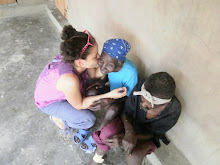
“You do things so that we’ll miss you,” Fabio repeats as the time gets closer.
I leave in a week.
The ties created leave me enriched, leaving me even more in love with all that surrounds me. And now my time to leave is near, Ah! I shall weep.
Now the sound of a gust of wind through the banana tree leaves, the smell of charcoal with the wet Earth, the tune of Little Richie’s “I feel good…”, and a certain rhythm of the drums send my heart soaring back to those it is tied to.
And I mustn’t forget that I have become responsible forever for what I’ve tamed…
With you,
Luisely
Tuesday, October 26, 2010

Tuesday, October 19, 2010
Holy Ground
I took off my shoes and let the mud squish through my toes from Kay Pov home.
“Take off your sandals, for the place where you are standing is holy ground.” Exodus 3:5
Papi and Marcos came for six days. Each day they were in Kay Pov building a shower, walkway and stairs to the shower. Papi left his shoes behind.
Marcos took a ball and played in front of the house with a group of boys of all ages, all barefoot, sliding in the mud and rocks.
One of Lisanne’s sons picked her body up from the morgue and took his dad, Daniel, with him. He left his mismatched, oversized flip-flops in the empty room.
Now Tiffany sleeps in their room with her brother for protection. Three weeks ago she slept without him; someone entered, abused her, leaving her forehead with a welt covering half of it and a broken lip. She takes off her flip-flops before entering the room.
The committee in Kay Pov is working! Yvka has been officially hired. The Fonkoze account is open both for Haitian deposits and US deposits. Letters have been written to local organizations to ensure a monthly influx of food in Kay Pov. The lady who washes the clothes and sheets of those in Kay Pov will now have ensured pay. She walks with her bare feet on the ground.
Take off your sandals for you are on Holy ground. Exodus 3:5
With you,
Luisely
“Take off your sandals, for the place where you are standing is holy ground.” Exodus 3:5
Papi and Marcos came for six days. Each day they were in Kay Pov building a shower, walkway and stairs to the shower. Papi left his shoes behind.
Marcos took a ball and played in front of the house with a group of boys of all ages, all barefoot, sliding in the mud and rocks.
One of Lisanne’s sons picked her body up from the morgue and took his dad, Daniel, with him. He left his mismatched, oversized flip-flops in the empty room.
Now Tiffany sleeps in their room with her brother for protection. Three weeks ago she slept without him; someone entered, abused her, leaving her forehead with a welt covering half of it and a broken lip. She takes off her flip-flops before entering the room.
The committee in Kay Pov is working! Yvka has been officially hired. The Fonkoze account is open both for Haitian deposits and US deposits. Letters have been written to local organizations to ensure a monthly influx of food in Kay Pov. The lady who washes the clothes and sheets of those in Kay Pov will now have ensured pay. She walks with her bare feet on the ground.
Take off your sandals for you are on Holy ground. Exodus 3:5
With you,
Luisely
Wednesday, October 6, 2010
God gives, God takes
At 5 in the morning Yvka opened the broken door to Lisanne’s room with a warm bowl of buyon (a soup with plantains, dumplings, and yucca).
As the sun rose from the mountains from afar Yvka sat next to her trying to spoon feed Lisanne, monitoring her breathing. Throughout the morning she bathed her in bed changing her clothes since she could no longer contain her bowel movements.
I arrived at 9am, after theater of the oppressed. The flies swarmed around her as she struggled for air. It was as if they knew.
We sat with the others as we planned for the morgue. Madame Lakwa tried to fill Lisanne’s empty stomach at noon while Yvka went off to hide her tears from the rest. They knew, we all knew.
I went to eat and bring back food for Yvka, who hadn’t eaten. Yvka and I stayed accompanying and sharing stories of the time spent with Lisanne as I braided her hair.
The wind blew, the children laughed, Alex complained, Tyler slept, and Lisanne ceased.
I went to her, calmly searched for her pulse, placed my hand on her chest, my finger under her nose, I kissed her still warm cheekbones that I had kissed so many times before and rubbed my warm nose against her cold one.
I walked across the room to Daniel to rub his head. Daniel spoke to me without lifting his head, “M pa kapab fe anyen, m pa kapab fe anyen. I can’t do anything, I can’t do anything.” He struggled up and limped over to his partner whom he had had ten children with. He uncovered her head, leaned over close to her face, straightened up, and limped back to his cot where he sat with his head low. “She’s dead. M pa kapab fe anyen.” I stood up, went outside, found the buyon and offered it to Daniel. He looked at Yvka and nourished himself with his companion’s last meal. He knew.
The wind blew, the children left, Alex complained, Tyler awoke, and Daniel ate.
As M. Lakwa and M. Lissette went searching for assistance at the morgue I continued to braid Yvka’s hair with Lisanne to my right and Daniel to my left.
When M. Lakwa and M. Lissette arrived with the stretcher the sun snuggled into the far off mountains. I thirsted.
They found no one to help carry the body to the morgue. We laid the stretcher by the cot on the floor. I lifted Lisanne’s head and upperbody while Yvka took her legs. Down the steep doorway, through the narrow corner, passed the gate, we carried. The weight of her body perplexed me; Lisanne was pure bones, and her body a cross. As soon as we passed the brick red gate two young men began bantering, laughing. The mockery continued all the way down the hill through the town to the main street.
People began to follow us out of curiosity.
“Who is it?” the voices cried out from porches and kiosks.
“An old one from Kay Pov,” a young woman responded through her smile.
“One less!” they cackled.
“Who is it?” they yelled, “Alex?”
“No, another from Kay Pov,” one of the followers replied.
“Aw, what a shame, I was hoping it was Alex.”
“Who is it?” they asked.
“A moun from Kay Pov.”
Laughter followed.
Motorcycles zoomed by honking and the mockery continued.
It wasn’t until we arrived to the main street that two women offered to help, M. Lissette on one corner of the stretcher and someone unknown to us on another corner. The four of us continued down the street towards the morgue as the crowds continued.
Abba, forgive them, for they know not what they do.
The man at the morgue wanted to discuss business before opening the door for us. Sweat streamed down our faces, the unknown lady went to place her corner on the floor while M. Lissette refuted, “No, we will carry her until she enters.” We did not budge. The man looked at our faces and unlocked the heavy doors to the small room that contained another body. We followed directions placing her body on the floor. We left.
There lay the body of Lisanne “like a dish that is broken.” (Psalm 31)
Our friend
who devoured her rice and beans and only used her spoon to scoop more in her hand,
who squabbled constantly and thunderously with Daniel, but who missed him terribly when he went out for wood,
who would store her powdered tobacco in a knot in the bandana she wrapped around her head,
who opened her clouded eyes towards the sun to sense the sunlight
is now a part of it, of us, all.
All the group of ladies from my first salsa class cleaned out her room today and sat to accompany and feel the wind blow by the side of Daniel and the others in Kay Pov.
Now Tiffany will have a bed.
With you,
Luisely
As the sun rose from the mountains from afar Yvka sat next to her trying to spoon feed Lisanne, monitoring her breathing. Throughout the morning she bathed her in bed changing her clothes since she could no longer contain her bowel movements.
I arrived at 9am, after theater of the oppressed. The flies swarmed around her as she struggled for air. It was as if they knew.
We sat with the others as we planned for the morgue. Madame Lakwa tried to fill Lisanne’s empty stomach at noon while Yvka went off to hide her tears from the rest. They knew, we all knew.
I went to eat and bring back food for Yvka, who hadn’t eaten. Yvka and I stayed accompanying and sharing stories of the time spent with Lisanne as I braided her hair.
The wind blew, the children laughed, Alex complained, Tyler slept, and Lisanne ceased.
I went to her, calmly searched for her pulse, placed my hand on her chest, my finger under her nose, I kissed her still warm cheekbones that I had kissed so many times before and rubbed my warm nose against her cold one.
I walked across the room to Daniel to rub his head. Daniel spoke to me without lifting his head, “M pa kapab fe anyen, m pa kapab fe anyen. I can’t do anything, I can’t do anything.” He struggled up and limped over to his partner whom he had had ten children with. He uncovered her head, leaned over close to her face, straightened up, and limped back to his cot where he sat with his head low. “She’s dead. M pa kapab fe anyen.” I stood up, went outside, found the buyon and offered it to Daniel. He looked at Yvka and nourished himself with his companion’s last meal. He knew.
The wind blew, the children left, Alex complained, Tyler awoke, and Daniel ate.
As M. Lakwa and M. Lissette went searching for assistance at the morgue I continued to braid Yvka’s hair with Lisanne to my right and Daniel to my left.
When M. Lakwa and M. Lissette arrived with the stretcher the sun snuggled into the far off mountains. I thirsted.
They found no one to help carry the body to the morgue. We laid the stretcher by the cot on the floor. I lifted Lisanne’s head and upperbody while Yvka took her legs. Down the steep doorway, through the narrow corner, passed the gate, we carried. The weight of her body perplexed me; Lisanne was pure bones, and her body a cross. As soon as we passed the brick red gate two young men began bantering, laughing. The mockery continued all the way down the hill through the town to the main street.
People began to follow us out of curiosity.
“Who is it?” the voices cried out from porches and kiosks.
“An old one from Kay Pov,” a young woman responded through her smile.
“One less!” they cackled.
“Who is it?” they yelled, “Alex?”
“No, another from Kay Pov,” one of the followers replied.
“Aw, what a shame, I was hoping it was Alex.”
“Who is it?” they asked.
“A moun from Kay Pov.”
Laughter followed.
Motorcycles zoomed by honking and the mockery continued.
It wasn’t until we arrived to the main street that two women offered to help, M. Lissette on one corner of the stretcher and someone unknown to us on another corner. The four of us continued down the street towards the morgue as the crowds continued.
Abba, forgive them, for they know not what they do.
The man at the morgue wanted to discuss business before opening the door for us. Sweat streamed down our faces, the unknown lady went to place her corner on the floor while M. Lissette refuted, “No, we will carry her until she enters.” We did not budge. The man looked at our faces and unlocked the heavy doors to the small room that contained another body. We followed directions placing her body on the floor. We left.
There lay the body of Lisanne “like a dish that is broken.” (Psalm 31)
Our friend
who devoured her rice and beans and only used her spoon to scoop more in her hand,
who squabbled constantly and thunderously with Daniel, but who missed him terribly when he went out for wood,
who would store her powdered tobacco in a knot in the bandana she wrapped around her head,
who opened her clouded eyes towards the sun to sense the sunlight
is now a part of it, of us, all.
All the group of ladies from my first salsa class cleaned out her room today and sat to accompany and feel the wind blow by the side of Daniel and the others in Kay Pov.
Now Tiffany will have a bed.
With you,
Luisely
Wednesday, September 29, 2010
setting captives free
Approximately 100 bodies packed the preschool classroom where the Sunday services in Kolet take place. Those who arrived later clung to the windows from the outside to catch the show. As I looked around the audience, standing in the back, I could see the sweat streaming down their rich dark skin, babies suckling on their mothers´ breast, children crawling between legs to go further up, but their eyes fixed on the action in the front of the room. I stood in disbelief as I witnessed the group of eight feed off the energy of the audience, improvising and hooking the spectators/spec-actors, having them roaring with laughter and interacting with the characters on stage. “God, these are the same that started with me a few months back, the lacked the courage to speak up loud enough for me to hear.” The miracles continue.
The conversation about the play and the possible solutions continues. People are still playing the game, searching for solutions in their own minds. In our own house on Sunday the conversations revolved around the play and the situation in the educational system, Nazareth and Rose, both discussing possibilities for the oppression to come to an end.
I knew nothing as to what would come out of Theater of the Oppressed in Jean Rabel and tried to follow the Divine Spirit with the eight, taking it day by day.
A missioner who began working in the Northwest of Haiti eight years ago saw the play last Thursday, before we presented it to an audience. After seeing the play we sat together and she asked me, “Luisely, you know that what you are doing in there is not simply theater, right?” “Yes,” I answered. “People in high places may not like you shining the light on these realities.” “Yes,” I answered.
The troop will travel around the department (state) by foot performing in different communities. Tomorrow we will present the play for a group of 48 educators from around the state. May the Holy One continue guiding us, giving us the courage and wisdom to continue seeking the truth, challenging one another, questioning systems, shining light on the oppression in search of justice. May we Love one another through theater, through laughter, drums, and tears.
With you,
Luisely
P.S.: Neida, you are right, step by step (drenched in faith).
The conversation about the play and the possible solutions continues. People are still playing the game, searching for solutions in their own minds. In our own house on Sunday the conversations revolved around the play and the situation in the educational system, Nazareth and Rose, both discussing possibilities for the oppression to come to an end.
I knew nothing as to what would come out of Theater of the Oppressed in Jean Rabel and tried to follow the Divine Spirit with the eight, taking it day by day.
A missioner who began working in the Northwest of Haiti eight years ago saw the play last Thursday, before we presented it to an audience. After seeing the play we sat together and she asked me, “Luisely, you know that what you are doing in there is not simply theater, right?” “Yes,” I answered. “People in high places may not like you shining the light on these realities.” “Yes,” I answered.
The troop will travel around the department (state) by foot performing in different communities. Tomorrow we will present the play for a group of 48 educators from around the state. May the Holy One continue guiding us, giving us the courage and wisdom to continue seeking the truth, challenging one another, questioning systems, shining light on the oppression in search of justice. May we Love one another through theater, through laughter, drums, and tears.
With you,
Luisely
P.S.: Neida, you are right, step by step (drenched in faith).
Wednesday, September 22, 2010
Theater of the Oppressed
Theater of the Oppressed is a form of theater started by a Brazilian director, Agusto Boal. Theater of the Oppressed presents a play in a variety of locations, from the street to a theater, that reflects a situation of oppression lived by the people of that area. Here in Jean Rabel a group of 7 women along with 1 man have journeying with me, exploring their realities to create a play that challenges spectators to change their reality. During this journey the group acted out numerous scenarios of oppression, opening my eyes to unspoken realities. In the beginning they didn´t know the definition of oppression, as soon as I explained the concept they recognized it. Every day they opened their eyes to more situations which they would act out and search for solutions, not through discussions, but by acting it out in the theater. There have been days when I have come home to cry after seeing the injustices and their reactions to them.
We created a piece which we plan to perform in the streets, in different communities, in different places of education that reveals the realities of the educational system here in Jean Rabel. The play highlights corruption in the administration and different ways students and parents deal with the system. The play lasts about 25 minutes and from that point on the audience begins to play. One of the actors, Ermithe, in this case, takes the role of the Joker. She invites the audience to become part of the piece to search for a solution to the injustice by entering the play as one of the oppressed characters. The spectator now becomes a spec-actor, a term coined by T.O. The audience member, or spec-actor, says what scene they would like to enter in and as what character. The actor who played the role in the play gives the spec-actor a part of their costume and the spec-actor begins to act out the solution with the other actors on stage. This continues until the audience decides that a solution has been found, or until they decide they are done. The practice of theater of the oppressed believes that the audience teaches the actors, as much as the actors teach the audience.
It becomes a game the audience wants to win, a game which reflects their lives, a game that may help them change their realities of oppression.
Last week, the group I have been working with decided that the play works wonderfully, but that there is no solution. I heard this slightly heartbroken because after all this time trying to motivate them to search for creative solutions, without violence, they threw in the towel with the play they created. I listened to them and told them, we could continue with the theater, but if they did not believe a solution could be found we would not perform the play for others. I explained that I didn´t say this as a threat, rather as a form of respect for the people of Jean Rabel. “If we go around performing the play without believing in a solution we are going around showing a reality they already now without giving hope of liberation. That is not theater of the oppressed. We can´t ask others to see hope for change if we ourselves are not willing to do the same.” I asked all of them to come up with one solution each for the following session. They did.
We plan on going through with the play; we will see what comes out of it. I pray that it motivate a few to dare to search for solutions and maybe plant seeds of hope in others.
With you,
Luisely
P.S.: If you have more questions, please ask, I’m more than happy to answer.
We created a piece which we plan to perform in the streets, in different communities, in different places of education that reveals the realities of the educational system here in Jean Rabel. The play highlights corruption in the administration and different ways students and parents deal with the system. The play lasts about 25 minutes and from that point on the audience begins to play. One of the actors, Ermithe, in this case, takes the role of the Joker. She invites the audience to become part of the piece to search for a solution to the injustice by entering the play as one of the oppressed characters. The spectator now becomes a spec-actor, a term coined by T.O. The audience member, or spec-actor, says what scene they would like to enter in and as what character. The actor who played the role in the play gives the spec-actor a part of their costume and the spec-actor begins to act out the solution with the other actors on stage. This continues until the audience decides that a solution has been found, or until they decide they are done. The practice of theater of the oppressed believes that the audience teaches the actors, as much as the actors teach the audience.
It becomes a game the audience wants to win, a game which reflects their lives, a game that may help them change their realities of oppression.
Last week, the group I have been working with decided that the play works wonderfully, but that there is no solution. I heard this slightly heartbroken because after all this time trying to motivate them to search for creative solutions, without violence, they threw in the towel with the play they created. I listened to them and told them, we could continue with the theater, but if they did not believe a solution could be found we would not perform the play for others. I explained that I didn´t say this as a threat, rather as a form of respect for the people of Jean Rabel. “If we go around performing the play without believing in a solution we are going around showing a reality they already now without giving hope of liberation. That is not theater of the oppressed. We can´t ask others to see hope for change if we ourselves are not willing to do the same.” I asked all of them to come up with one solution each for the following session. They did.
We plan on going through with the play; we will see what comes out of it. I pray that it motivate a few to dare to search for solutions and maybe plant seeds of hope in others.
With you,
Luisely
P.S.: If you have more questions, please ask, I’m more than happy to answer.
Thursday, September 16, 2010
conversations
My beloveds!
I haven´t abandoned you, you´ve been in my thoughts and prayers. I´ve received emails regarding the last post, that I did in an attempt to show you that I was still with you, but it didn´t seem to have much success, so here I am.
The two in the last post are Fabio and Pierre (whose mother leaves him in Kay Pov for the elderly to care for him while she goes to the market to sell the goods she can). He fell a week before the picture was taken and still is wounded and that´s why he has the handkerchief wrapped around his arm. All of those in Kay Pov care for him, feeding him (and his mother), scolding him, pampering him, cleaning him, and protecting him. The relationship is beautiful; the way Pierre melts in the arms of Fabio or goes running into his arms in laughter is precious. Pierre adds a spirit to Kay Pov that only a child can add.
This past week prayers were answered, as in every week. The day before Yvka and I were going to go open the account with Madame La Croix and before we began our visits asking for money around the community, three blessings paid us a visit. A priest from Jean Rabel who now resides in the US came along with two of his friends to visit Nazareth. As we sat outside sharing ideas and passions, livestock and dancing, the priest expressed a desire, “I have $5,000 that I had in mind to put towards a center for the elderly, but I have been praying about putting it towards Kay Pov instead.” This came from him, I hadn´t mentioned the ideas or the fundraising. Nazareth immediately directed him towards me, “She´s the one you need to talk to.” The conversation was gloriously providential. The other two gentlemen with him were equally thrilled and willing to pay Kay Pov a visit.
Their eyes, ears, noses, feet, and heart opened to Kay Pov during their visit. They each expressed their desire for the conditions to become more humane, so the conversation continued. Many ideas are swirling in the air, while others are marinating in divine juices, our deep desire is to work with the people of Jean Rabel to hear their desires and to be able to work with them in a sustainable and just way for the people of Kay Pov. We are excited and we need your prayers.
I will keep you updated as we see where God takes us on this journey with Kay Pov. I´m excited!!! So excited!!!
With you,
Luisely
P.S.: Walter´s better, yesterday evening he told me that God explained to him that I was going to marry a Haitian and have 6 to 7 children and stay net, or for good, in Haiti. I laughed hysterically, telling him that the message still hadn´t gotten it´s way around to me, but I´d be on the lookout. Doctor Geralda visited them today, as promised, explaining all the prescriptions to Yvka, who took on the responsibility of giving them their medications, at the required time and with a little snack if food is needed. I am filled with hope because the last few times that I´ve visited Kay Pov, I´ve met Yvka there doing the same, simply sitting and chatting. They´re our family.
I haven´t abandoned you, you´ve been in my thoughts and prayers. I´ve received emails regarding the last post, that I did in an attempt to show you that I was still with you, but it didn´t seem to have much success, so here I am.
The two in the last post are Fabio and Pierre (whose mother leaves him in Kay Pov for the elderly to care for him while she goes to the market to sell the goods she can). He fell a week before the picture was taken and still is wounded and that´s why he has the handkerchief wrapped around his arm. All of those in Kay Pov care for him, feeding him (and his mother), scolding him, pampering him, cleaning him, and protecting him. The relationship is beautiful; the way Pierre melts in the arms of Fabio or goes running into his arms in laughter is precious. Pierre adds a spirit to Kay Pov that only a child can add.
This past week prayers were answered, as in every week. The day before Yvka and I were going to go open the account with Madame La Croix and before we began our visits asking for money around the community, three blessings paid us a visit. A priest from Jean Rabel who now resides in the US came along with two of his friends to visit Nazareth. As we sat outside sharing ideas and passions, livestock and dancing, the priest expressed a desire, “I have $5,000 that I had in mind to put towards a center for the elderly, but I have been praying about putting it towards Kay Pov instead.” This came from him, I hadn´t mentioned the ideas or the fundraising. Nazareth immediately directed him towards me, “She´s the one you need to talk to.” The conversation was gloriously providential. The other two gentlemen with him were equally thrilled and willing to pay Kay Pov a visit.
Their eyes, ears, noses, feet, and heart opened to Kay Pov during their visit. They each expressed their desire for the conditions to become more humane, so the conversation continued. Many ideas are swirling in the air, while others are marinating in divine juices, our deep desire is to work with the people of Jean Rabel to hear their desires and to be able to work with them in a sustainable and just way for the people of Kay Pov. We are excited and we need your prayers.
I will keep you updated as we see where God takes us on this journey with Kay Pov. I´m excited!!! So excited!!!
With you,
Luisely
P.S.: Walter´s better, yesterday evening he told me that God explained to him that I was going to marry a Haitian and have 6 to 7 children and stay net, or for good, in Haiti. I laughed hysterically, telling him that the message still hadn´t gotten it´s way around to me, but I´d be on the lookout. Doctor Geralda visited them today, as promised, explaining all the prescriptions to Yvka, who took on the responsibility of giving them their medications, at the required time and with a little snack if food is needed. I am filled with hope because the last few times that I´ve visited Kay Pov, I´ve met Yvka there doing the same, simply sitting and chatting. They´re our family.
Tuesday, September 14, 2010

Subscribe to:
Posts (Atom)